Abducted and Abandoned analyzes Sweden’s failures in cases involving missing and abducted children, revealing a troubling gap between its global reputation as a human rights champion and its actual practices. Despite the country’s celebrated social welfare system, families caught in these crises often face a bureaucratic maze that prolongs their suffering. Administrative obstacles and a lack of decisive intervention intensify the emotional and psychological toll on both parents and children, leaving many feeling abandoned by the very system meant to protect them.
This inaction highlights a deeper issue: Sweden’s failure to prioritize its most vulnerable citizens. The current approach, where procedural delays and inefficiency overshadow urgent needs, starkly contrasts with the country’s promoted image as a defender of human rights. Reform is essential. Sweden must replace its rigid, impersonal processes with a compassionate, child-centered framework that ensures swift action and tangible results.
The stakes are high
Children’s safety and well-being should never be compromised by bureaucratic obstacles or institutional complacency. Addressing this issue is not just a practical necessity but a moral obligation that demands immediate attention. Sweden’s future credibility as a champion of human rights hinges on its willingness to act decisively, prioritize families in crisis, and deliver on its promise to protect those who need it most.
Sweden’s Self-Perceived Image
A scientific article examining Sweden’s self-proclaimed image as a defender of human rights provides a detailed analysis of the contradictions, unfulfilled promises, and hypocrisy underlying the Swedish state’s portrayal of itself as a humanitarian superpower. The article critically evaluates the operational framework of Sweden’s “feminist foreign policy,” exposing the disparity between its stated ideals and its actual practices.
The foundation of Sweden’s self-proclaimed identity as a humanitarian superpower is deeply rooted in its historical understanding and practice of neutrality and non-alignment. These principles have been framed as embodiments of humane values, serving as the basis for Sweden’s self-perceived legitimacy to engage in global affairs.
This ethos is encapsulated in a 1968 speech by Olof Palme, which articulated a moralistic and duty-driven perspective. Palme’s vision emphasized Sweden’s capacity to influence international affairs despite its limited size and resources, leveraging its reputation for humanistic values. This vision, almost messianic in nature, reflects Sweden’s steadfast determination to bring its experiences and values to a troubled world.
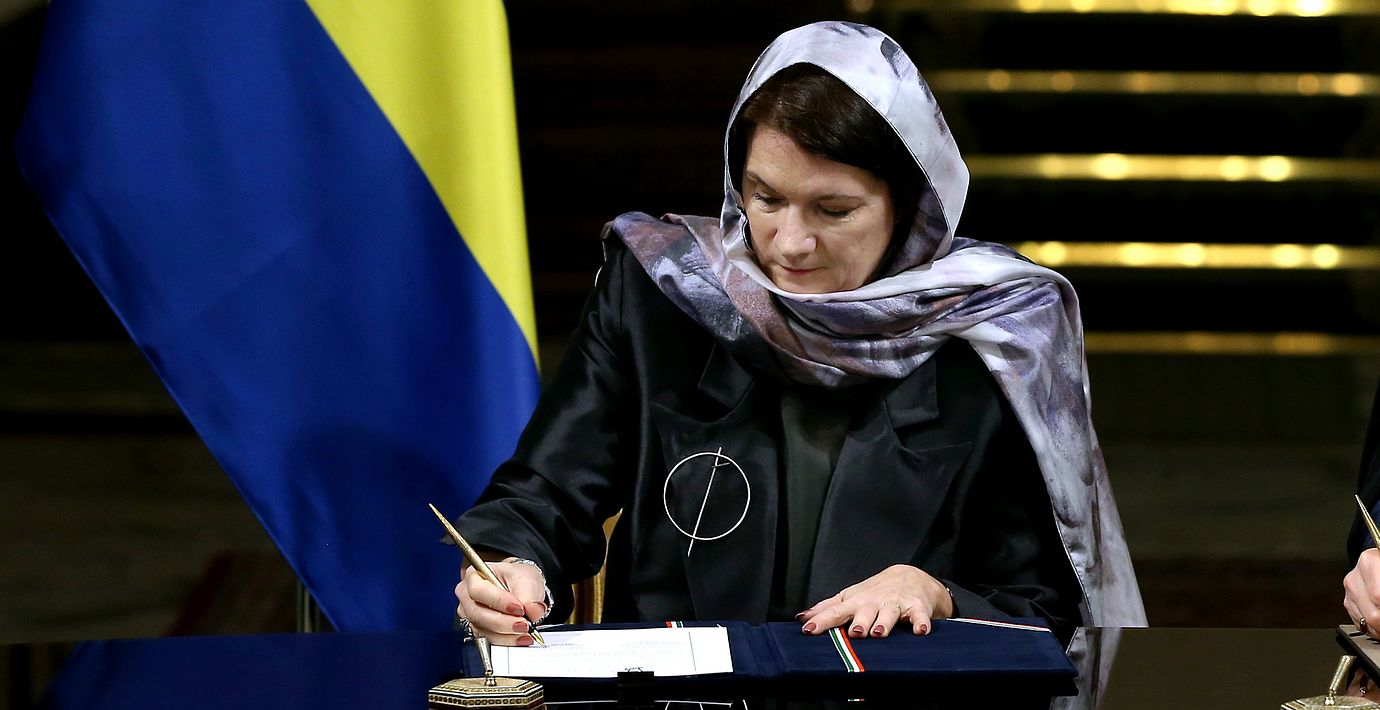
An ideological extension of Sweden’s global brand came with the announcement of its “feminist foreign policy” agenda in October 2014, which complemented the notion of a humanitarian superpower. However, significant contradictions have emerged in practice. Examples include Sweden’s supply of arms and technology to the volatile Middle East and the decision by Swedish ministers visiting countries in the Middle East and North Africa region to wear a hijab, actions that seemingly contradict the rhetorical principles of feminism.
These inconsistencies raise critical questions about the alignment between Sweden’s self-promotion as a global moral leader and the realities of its actions on the international stage.
Each year, numerous Swedish children are unlawfully taken across borders by a parent, in blatant violation of custody agreements and international law. These abductions cause profound disruptions to young lives, severing children from the safety and stability they rely upon while subjecting left-behind parents to an unrelenting cycle of fear and anguish. Despite the gravity of such cases, Sweden’s response has been widely criticized for its slow and insufficient action, exacerbated by bureaucratic inefficiencies and an overreliance on administrative procedures.
During the research for this article, I encountered a March 2023 report featuring Erica Neiglick, head of a unit within Sweden’s Ministry for Foreign Affairs (MFA), who made extensive efforts to justify why Sweden fails to repatriate abducted children. The explanations and arguments presented in the short SVT video clip were startling, offering justifications that highlight the reluctance and systemic failures of the Swedish state to protect its most vulnerable citizens—our children. These revelations underscore the urgent need for Sweden to reevaluate its approach and prioritize decisive action to address this pressing issue.
Child abduction cannot be justified under any circumstances, particularly when a court has ruled that the abducting parent has committed a serious crime and an international arrest warrant has been issued.
The Hague Convention on the Civil Aspects of International Child Abduction is explicit in its mandate: signatory countries are obligated to uphold the convention’s provisions, ensuring the prompt return of abducted children to their country of habitual residence. The convention aims to restore the status quo and allow custody disputes to be resolved in the appropriate jurisdiction.
Signatory states are further obligated to assist their citizens in securing the return of abducted children, even in complex cases involving countries such as Belarus and Japan, rather than merely fulfilling bureaucratic duties. However, many nations within the former Soviet bloc have exhibited a concerning pattern of disregarding international treaties, laws, and human rights, despite their formal commitments under the Hague Convention.
A stark example of Sweden’s indifference and failure to provide adequate support is evident in the 2017 Hague case Cheropoulos v. Trafimovich, involving a father’s efforts to secure the return of his daughters from Belarus to Sweden. Despite a formal letter from the father’s Belarusian attorney to Sweden’s Ministry for Foreign Affairs (MFA), requesting the presence of an observer to counteract the Belarusian judiciary’s blatant disregard for justice and the principles of the Hague Convention, Sweden declined. The MFA cited its policy of “neutrality” as the reason for not deploying an observer from its diplomatic mission in Minsk to attend the hearings.
Sweden’s indifference and reluctance to provide assistance by dispatching an observer from their diplomatic mission in Minsk (Belarus) compelled the father, in his desperation, to seek support from foreign sources. Ultimately, he received assistance from the Hellenic mission in Minsk, which sent their Consul to observe the court hearings. Additionally, the U.S. Ministry of Foreign Affairs sent a formal letter to the Swedish Ministry of Foreign Affairs. Following these interventions, Sweden permitted its ambassador to attend the court hearings as an observer.
Tragically, the father’s attorney, Alexander Danilevich, was imprisoned on April 10, 2023, and sentenced to a 10-year term due to his civic stance on the war in Ukraine. This case underscores the critical need for active diplomatic engagement and support for citizens facing such dire circumstances.
The father was also convicted in absentia in early April 2024 due to the websites he created for his children, where he exposes Belarus’ judicial system and government officials. The offense he was charged with was classified under the title “Extremist.”
In contrast, other countries, such as Norway, Finland, and Denmark, actively support their citizens in recovering abducted children. Sweden’s refusal to take a similarly proactive approach, hiding behind its neutrality policy, highlights a troubling inconsistency in its commitment to protecting its most vulnerable citizens.
While writing this article has been a profoundly emotional endeavor filled with sadness and frustration, I cannot help but highlight a satirical video clip by the renowned Jesper Rönndahl. In the clip, he humorously addresses Sweden’s neutrality policy through an interview with Margaret Thatcher conducted by a Swedish reporter many years ago. The humor, though light-hearted, underscores the broader challenges of Sweden’s approach to neutrality in sensitive and urgent matters such as child abduction.
Mr. Rönndahl interpreted Mrs. Thatcher’s response to Sweden’s neutrality as “SPINELESS COWARDS” raises a critical question:
How can the Swedish state claim “neutrality” in cases of child abduction while simultaneously promoting itself as a humanitarian superpower and a defender of human rights?
Such a contradiction undermines Sweden’s credibility and moral standing, as true humanitarian leadership demands decisive action to protect the most vulnerable, particularly children. Neutrality in the face of injustice is not neutrality—it is complicity.
1. Contradiction of the Hague Convention’s Purpose: Prompt Return of Abducted Children
The Hague Convention on International Child Abduction aims to ensure the prompt return of children wrongfully removed or retained across international borders. Yet, the statement:
“It is not always obvious that a child should be returned”, contradicts the Convention’s primary goal. While exceptions are allowed under specific circumstances (e.g., risk of harm to the child or objections from the child if of sufficient age), the statement could suggest a more flexible or discretionary interpretation that might delay or hinder reunification efforts.
2. Delays in Legal Processes
The Convention requires contracting states to resolve abduction cases within six weeks. However, the text highlights delays:
“It often takes several months before this happens – a problem the Ministry of Foreign Affairs often has in its cooperation with other countries”. These delays can undermine the Convention’s effectiveness and the child’s stability.
The Swedish MFA acknowledges the challenge but does not specify systemic measures to mitigate such delays, potentially weakening its commitment to the Convention.
3. Visitation Agreements vs. Repatriation
The statement:
“Visitation instead of repatriation” may raise concerns about prioritizing contact over return. While the Hague Convention allows for access rights to be established, it emphasizes repatriation in cases of wrongful removal.
A focus on visitation could be seen as diverging from the core principle of returning the child to their habitual residence to resolve custody disputes under local jurisdiction.
4. Lack of Bilateral Agreements
Sweden’s preference for promoting broader adherence to the Hague Convention over bilateral agreements with non-signatory countries is understandable. However, it results in limited recourse when dealing with non-convention countries:
“Why Sweden does not have bilateral relations with non-convention countries to which most children are taken”.
This position could leave abducted children without effective legal mechanisms for resolution, contrasting with the Convention’s goal of providing robust frameworks for international cooperation.
5. Ethical and Diplomatic Reciprocity
The MFA statement implies a reciprocal arrangement for returning children:
“If we want to demand that other countries bring back abducted children… then they expect us to bring back abducted children…”
This approach might prioritize political or diplomatic considerations over the child’s best interests. The Hague Convention frames child abduction as a legal and humanitarian issue, not one of reciprocity or diplomacy.
6. Risk of Inconsistent Interpretations
Statements like:
“It is primarily the time it takes to hear child abduction cases in court that delay the process”, suggests systemic inefficiencies within Swedens’ and partner countries’ judicial systems. Such delays, coupled with the discretionary tone regarding whether children “should” be returned, risk inconsistent application of the Hague Convention, which could erode international trust in Sweden’s adherence.
Висновок
The controversies identified suggest areas where Sweden’s implementation of the Hague Convention might be perceived as diverging from its principles. Specifically, delays in resolving cases, an emphasis on visitation, lack of bilateral agreements with non-convention countries, and references to diplomatic reciprocity introduce complexities that could undermine the Convention’s objectives.
These points warrant further exploration to ensure Sweden’s policies align with the Convention’s goals of protecting children and ensuring prompt, consistent outcomes.
This situation points to a systemic failure: an overreliance on procedural formalities and impersonal processes, often at the expense of reuniting families and addressing their urgent needs. The emotional and psychological toll on parents and children remains a secondary concern, perpetuating unnecessary suffering.
Sweden’s inability to address these cases effectively raises serious questions about its dedication to safeguarding its most vulnerable citizens. Is this failure a consequence of Sweden’s desire to maintain a so-called “neutrality” status? International child abduction is inherently a global matter, one that demands action—not neutrality.
The future of Sweden’s children demands a resolute commitment to their protection, prioritizing decisive action over bureaucratic inertia. There can be no delays, no excuses, and no compromises.
Legal Obligations and Shortcomings
As a signatory to the Hague Convention on the Civil Aspects of International Child Abduction, Sweden is legally obligated to facilitate the prompt return of abducted children to their country of habitual residence. This international agreement aims to protect children from the trauma of abduction by providing a clear and efficient framework for resolving cross-border custody disputes. However, in practice, Sweden’s implementation of these commitments has been deeply flawed.
Families seeking help often find themselves entangled in a labyrinthine bureaucracy plagued by delays, inefficiency, paper pushers and a lack of specialized expertise. Instead of offering swift and decisive support, the system forces families to endure prolonged uncertainty, leaving children separated from their homes and loved ones.
This failure raises serious concerns about Sweden’s true commitment to its youngest citizens. A system designed to prioritize children’s well-being has instead devolved into one characterized by administrative stagnation and indifference.
Urgent reform is needed to ensure that Sweden upholds both the spirit and the letter of the Hague Convention, restoring faith in its ability to protect vulnerable children and support affected families.
Real Stories of Bureaucratic Betrayal
The tragic consequences of Sweden’s failure to address child abduction cases are vividly illustrated by the experiences of families like *Anna’s and *Johan’s. Anna, a Swedish mother, watched helplessly as her ex-husband abducted their two children to a non-Hague Convention country. Despite presenting clear evidence and making urgent appeals, she faced months of delays before Swedish authorities even began coordinating internationally. Meanwhile, her children suffered emotional instability and dislocation, left to endure the consequences of diplomatic hesitations and administrative inaction.
Johan’s story reveals a similar pattern. When his ex-wife violated their custody agreement by relocating their children to another European country, he immediately reported the breach. However, Swedish officials cited “procedural delays” and the need for “diplomatic caution,” leaving Johan to navigate a foreign legal system with minimal support. His children endured the psychological strain of prolonged separation, while the system that should have acted swiftly was instead immobilized by bureaucratic red tape.
These are not isolated incidents but symptoms of a systemic failure. Sweden’s response to child abduction is marked by bureaucratic inertia and misplaced priorities, where adherence to procedure takes precedence over the urgent need to protect vulnerable children and reunite families. The reliance on endless paperwork and diplomatic caution (“neutrality”) betrays Sweden’s duty to safeguard its youngest citizens.
These stories serve as a stark reminder of the urgent need to overhaul the system, replacing apathy and inefficiency with decisive, compassionate action that places children’s safety and stability at the forefront.
* All names are fictive
The Toll of Administrative Apathy
For left-behind parents, child abduction is more than an emotional tragedy—it’s an overwhelming financial and psychological burden. The path to securing a child’s return is often marred by lengthy legal battles, exorbitant costs, and endless complications. Many parents feel abandoned by a system that should support them, instead encountering unclear procedures, poor communication, and an unsettling lack of empathy from Swedish authorities.
Sweden’s system, instead of providing urgent and compassionate assistance, often prioritizes adherence to protocol over the lives it is meant to safeguard. Parents are left to confront an unresponsive, impersonal bureaucracy, powerless to protect their children from the fallout.
This stark failure highlights the pressing need for systemic change. Justice delayed in these cases is justice denied, with devastating consequences for families. Sweden must replace its fixation on process with a child-first approach that prioritizes timely and effective action. Reform is not optional—it is an ethical obligation.
A Call for Meaningful Reform
Sweden’s systemic shortcomings in addressing child abduction cases demand immediate and comprehensive reform. Advocacy groups and affected families have consistently emphasized the need for urgent change to ensure that abducted children and their left-behind parents receive the justice and support they deserve. Complacency is no longer an option.
To rebuild trust and effectiveness, Sweden must implement key reforms:
1. Specialized Training Law enforcement and judicial officials must be thoroughly trained to handle the unique complexities of international child abduction cases. Their responses must prioritize the safety and well-being of children, ensuring timely and informed action.
2. Improved Coordination Collaboration with international organizations and foreign governments must be significantly strengthened. Efficient processes and proactive diplomacy are crucial to enforcing custody agreements and expediting the return of abducted children.
3. Comprehensive Support for Families Left-behind parents need access to meaningful legal, financial, and emotional assistance. Navigating the intricate legal frameworks of international abduction cases should not be a solitary or insurmountable challenge.
4. Preventive Safeguards Stricter controls on travel documentation for children involved in custody disputes are essential. Prevention is not only practical but also an ethical responsibility.
These reforms are not negotiable—they are a moral obligation. For too long, bureaucratic inefficiency and institutional indifference have exacerbated the suffering of families and left abducted children to endure the devastating consequences of instability and separation. Sweden must prioritize the protection of its most vulnerable citizens, addressing these failures head-on to restore trust and uphold its values. Anything less would be a profound abdication of responsibility.
Government Response and Public Pressure
Faced with growing public outcry and international scrutiny, Swedish officials have acknowledged the need for reform in managing international child abduction cases. Recent initiatives, such as the creation of a dedicated task force and increased funding for legal assistance, are being presented as progress.
However, critics contend that these efforts barely address the underlying issues—entrenched bureaucracy and a lack of urgency that continue to fail abducted children and their left-behind families.
While the task force is a symbolic step, it is under-resourced and lacks the authority to handle the complex and time-sensitive nature of these cases effectively. Similarly, additional funding for legal aid, though helpful, does little to resolve the deeper problem of systemic inertia. Swedish authorities persist in clinging to rigid protocols and outdated procedures, forcing families into an exhausting bureaucratic maze while their children remain in precarious circumstances abroad.
For years, Sweden’s approach has prioritized diplomatic caution (Neutrality) and procedural formalities over the immediate needs of affected families. This hesitancy perpetuates the suffering of abducted children and their parents, leaving them trapped in cycles of uncertainty and pain. The recent measures seem more designed to appease critics than to implement meaningful change.
What Sweden truly needs is a bold and comprehensive reform agenda. This must include empowering law enforcement and judicial bodies with specialized training and adequate resources, streamlining international cooperation to expedite resolutions, and fostering a culture of empathy and accountability within the system. Bureaucratic hurdles must be dismantled to ensure swift and compassionate action in these urgent cases.
Half-hearted measures and superficial solutions only deepen the crisis. If Sweden is to protect its most vulnerable citizens and restore public trust, it must go beyond surface-level reforms and commit to systemic transformation. Only then can it fulfill its moral and legal obligations while reaffirming its standing as a champion of human rights.
Sweden’s inability to respond effectively to cases of missing and abducted children tarnishes its standing as a global advocate for human rights. Beneath the façade of its renowned social welfare system lies a labyrinth of bureaucratic delays that offers little relief to families grappling with the trauma of child abduction. For these parents and children, the system delivers empty assurances rather than timely intervention, forcing them into prolonged suffering while their pleas go unanswered.
The impact on children is especially devastating. Torn from their homes, schools, and loved ones, they face deep emotional scars that can alter the course of their lives. Parents, left to navigate a slow and unyielding system, are met with indifference, their attempts to secure their children’s safety blocked by red tape. These are not isolated cases—they represent systemic neglect that stands in stark contrast to Sweden’s image as a defender of human dignity.
This grim reality demands urgent action. The bureaucratic inefficiency and misplaced priorities that prioritize procedural formalities over the safety of children are an undeniable failure of responsibility. To preserve its credibility as a moral leader, Sweden must abandon half-measures and enact meaningful, far-reaching reforms.
Key steps include equipping law enforcement and judicial systems with the training and resources necessary to address the complexities of international abduction. Improved coordination with international partners must become a priority, ensuring swifter resolutions to reunite children with their families. Additionally, comprehensive support for parents—including legal aid and financial assistance—is essential to alleviate the burdens they face while navigating these arduous battles.
Sweden’s commitment to protecting its most vulnerable citizens is now under scrutiny. Token reforms and symbolic gestures will no longer suffice. To restore trust and honor its obligations, Sweden must embrace decisive, compassionate reform. Failing to act is not simply an administrative oversight—it is a profound moral failing that risks eroding the nation’s values and credibility. Only by acting boldly and empathetically can Sweden ensure that no child or family is abandoned by the system again.
A shift in priorities is urgently needed. Sweden must replace its procedural rigidity with proactive measures that prioritize swift resolution and compassion, reaffirming its commitment to the well-being of children and families. If you fail your citizens, you fail as a nation!
Given Sweden’s self-promotion as a humanitarian superpower and a defender of human rights, one must question whether this is merely a façade designed to deceive both Swedish citizens and the international community. Is it simply an attempt to obscure the reality of its actions, or a genuine commitment to upholding these values?
Amendment
On January 20, 2025, I received a letter from Prosecutor Sofia Mineur informing me that the case concerning the abduction of my children is being closed. Since my children were abducted in 2017, the investigation has been characterized by negligence, incompetence, and a clear unwillingness from both the Prosecutor’s Office and the Police to thoroughly and properly investigate the circumstances.
For instance, the case file regarding the abduction of my children was not opened until April 12, 2021, which was disclosed to me by a case officer within the police. Shortly thereafter, this officer became unreachable, and a new case officer was assigned.
The investigation conducted by the police has been marred by serious deficiencies, particularly during interrogations with Maria Kaberska (now Khatsanovska) in connection with the abduction in 2017. Maria Khatsanovska, formerly Kaberska, was involved in the abduction of my children, an act that was classified as “gross complicity in child abduction” in 2021. Despite my repeated statements to the police and prosecutor from day one of the abduction—that it is not possible to purchase same-day airline tickets online—this information was ignored. This was also overlooked by the police’s interrogator at the time, despite their knowledge of the facts.
Maria Khatsanovska, formerly Kaberska, left Sweden in January 2019 and now resides in London, where she works for the company Deliveroo. Her departure from Sweden can be presumed to have been a flight, as she was aware that I would never cease questioning and seeking to prove the falsehoods she presented during interrogations.
In summary, both the Prosecutor and the Police have demonstrated significant shortcomings in their work. A thorough and serious investigation has, in essence, never been conducted, as the authorities appear to have prioritized maintaining their own comfort zones over ensuring justice and have shown an unwillingness to act beyond their established routines.
However, I wish to express my gratitude to the case officer who, despite later being removed from my case, provided valuable information and demonstrated a professional and empathetic approach. It is disheartening that such dedication is neither encouraged nor acknowledged.





 UA
UA  EN
EN  RU
RU  SK
SK  IT
IT  EL
EL  SV
SV