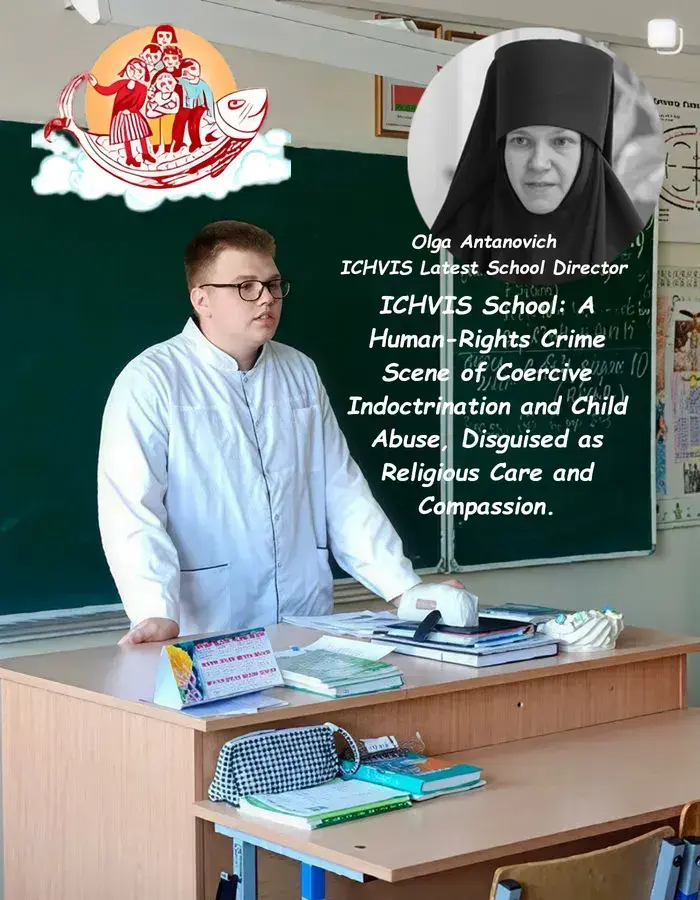
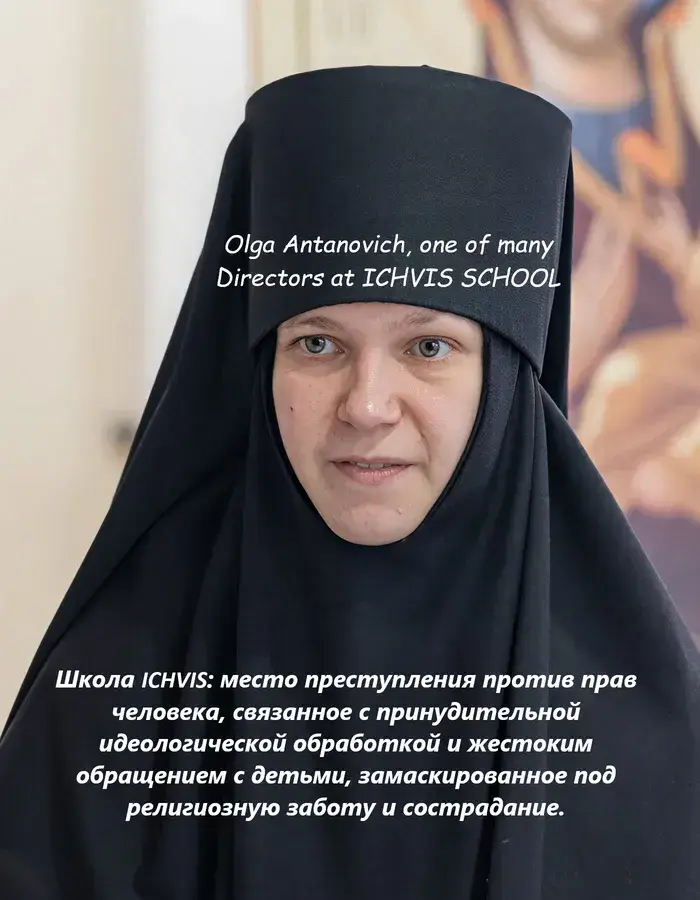
ICHVIS SCHOOL: A Human-Rights Crime Scene of Coercive Indoctrination and Child Abuse, Disguised as Religious Care, Compassion, and Education.
The St. Elisabeth Monastery School Ichvis in Minsk can no longer be credibly described as an educational institution. It bears far closer resemblance to a site of systemic institutional malpractice, with serious and lasting implications for children’s fundamental rights.
After seven years of compulsory English instruction, a significant number of students reportedly remain unable to sustain even rudimentary conversation. This outcome is not a marginal shortcoming; it constitutes prima facie evidence of severe pedagogical failure and raises legitimate concerns of educational misrepresentation, if not outright fraud.
Academic failure, however, is only the surface symptom. The school’s governance is widely perceived as opaque, insulated from accountability, and resistant to scrutiny by parents, independent observers, or the public. Decision-making processes are concealed, grievances are neutralized rather than addressed, and institutional self-protection appears to take precedence over child welfare.
More alarmingly, consistent testimonies from critics, affected families, and former insiders describe Ichvis School as an environment of sustained ideological coercion. Children are reportedly exposed to manipulation, indoctrination, and psychological conditioning aimed at aligning them with the so-called “Russian world” doctrine, mediated through religious authority. Education is subordinated to ideological conformity; critical thinking is displaced by enforced belief.
Such practices stand in direct violation of the UN Convention on the Rights of the Child, UNESCO’s fundamental principles of education, and internationally recognized norms protecting freedom of thought, conscience, and academic integrity. They also gravely contravene Belarusian domestic legislation on children’s rights formally issued under President Alexander Lukashenko himself.
By weaponizing schooling as a tool of religious and political socialization, Ichvis School transforms a protected child’s right into an instrument of control. This is not education; it is abuse conducted under institutional cover.
The situation demands urgent international attention, independent investigation, and meaningful accountability.
Karl Marx’s description of religion as “the opium of the people” has here evolved from metaphor into operational doctrine. One might even argue that the dosage is no longer symbolic; it is systemic.
Author: Leon (Nic. Cheropoulos) Europe, 2026.02.02




 EL
EL  EN
EN  RU
RU  UA
UA  SK
SK  IT
IT  SV
SV