From the outside, St. Elisabeth Monastery in Minsk, Belarus, appears as a beacon of Orthodox charity, a spiritual sanctuary that cares for orphans, employs the disabled, and spreads faith through beautiful icons and heartfelt testimonials.
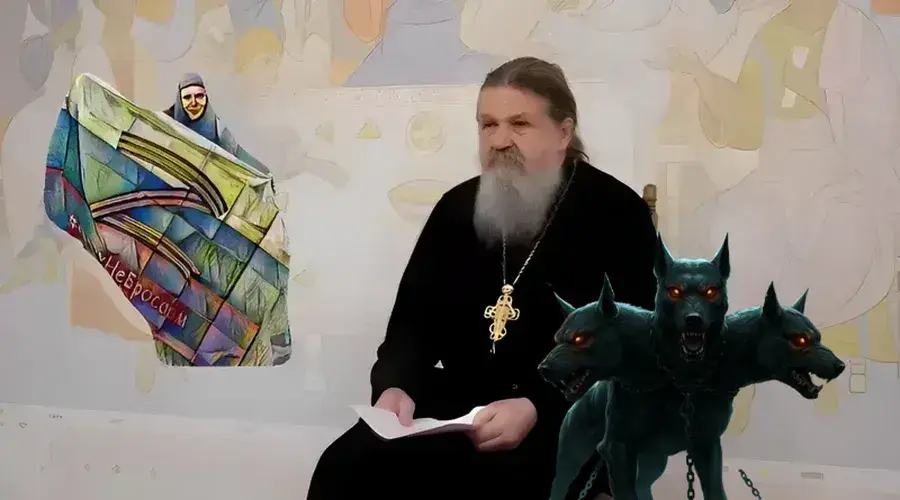
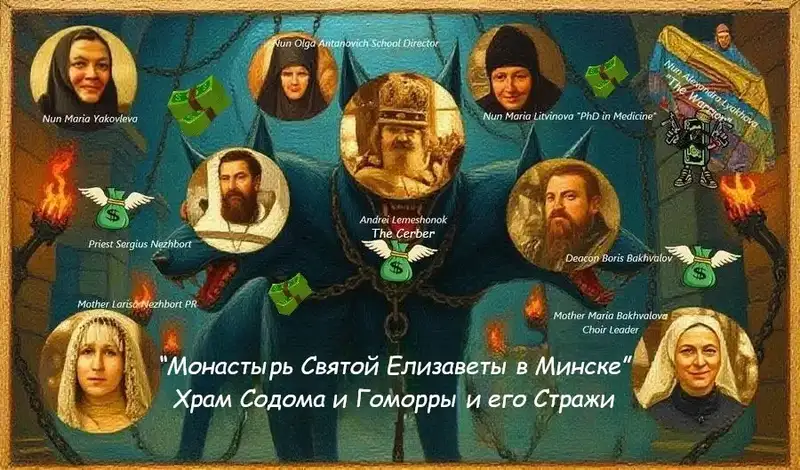
Yet behind this carefully curated image lies a darker reality: an institution that has weaponized religious authority to serve autocratic power, exploit the vulnerable, and fund military aggression. A Devils Palace disguised with beautiful icons, heartfelt testimonials, and guarded by Andrei Lemeshonok’s loyal Gate-Keepers.
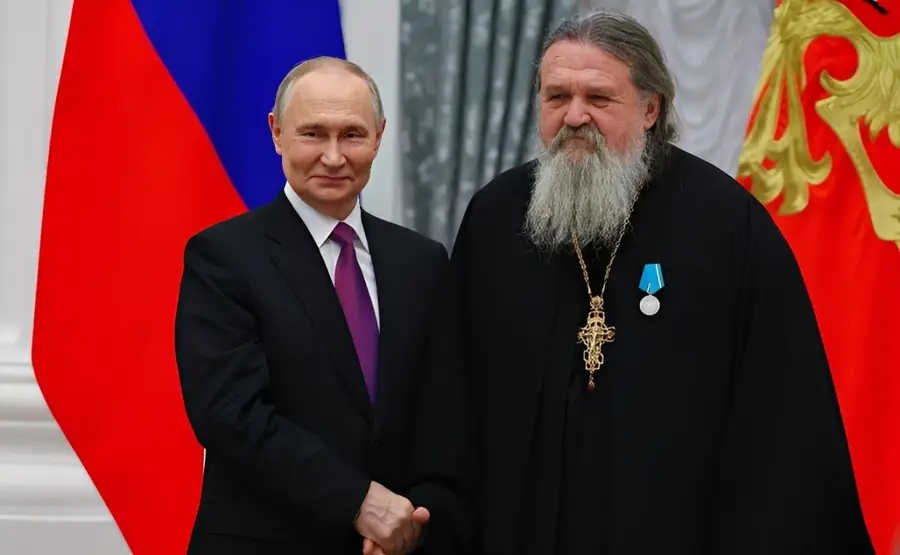
This transformation from a genuine religious community to what investigators have termed an “Orthodox Business Holding”, reveals how thoroughly a spiritual institution can be corrupted when faith becomes inseparable from political ideology and profit motives. Recently, he was awarded the Pushkin prize for his support of Russia’s military aggression in Ukraine by his mentor, Vladimir Putin.
Founded in 1999 with a mission to serve the sick and marginalized, St Elisabeth Convent has evolved into a vast commercial enterprise operating more than 70 outlets across Belarus. The convent sells religious artifacts, herbal remedies, vestments, “education”, and icons while maintaining workshops that employ approximately 1,600 people across its operations.
A 2024 investigation by Bureau (Buro Media), exposed systematic financial irregularities: donations channeled as undeclared cash, circumvented taxes, and profit motives that have eclipsed charitable intentions. Former nun “Sister Volha” testified to exploitative practices, including soliciting property deeds from elderly individuals in exchange for promised lifelong care that was never delivered. Financial flows have allegedly supported paramilitary activities abroad, transforming a spiritual institution into what critics call an engine of militarized commerce.
This economic infrastructure serves a dual purpose: generating revenue while creating multiple pressure points for enforcing ideological conformity. Employment, spiritual community, housing for monastics, and social services all become contingent on political obedience.
The Architect of Authoritarianism and Kleptocracy
Andrei Lemeshonok
Under the leadership of Andrei Lemeshonok, the convent’s founder and de facto leader, St Elisabeth has become a vocal champion of religious nationalism where devotion to God becomes inseparable from devotion to autocratic power. Lemeshonok has weaponized his moral authority, transforming sermons into political manifestos that frame Russia’s invasion of Ukraine as holy war and portray peaceful protesters in Belarus as agents of demonic corruption.
The convent’s youth programs represent systematic exploitation of vulnerable children. “Ichvis School” provides substandard education focused narrowly on “Russian Orthodox Faith”, while “Eaglets” (Orlyata), a cadet formation, instructs children in military drills, weapons assembly, and patriotic propaganda, often under exposure to the pro-war “Z” symbol.
The activities of “Eaglets” (Orlyata) are absent since the head of this formation, nun Rebecca Pereira left the enviroment of the Monastery St. Elisabeth and relocated to Montenegro. The reasons for her departure are unknown.
Orphans and children from vulnerable families in the convent’s care are exploited and exposed to curriculum glorifying militarism, demonizing the West, and cultivating unquestioning obedience. The very individuals who should receive unconditional care, education, and protection are instead being abused, exploited and molded into foot soldiers for ideological warfare.
International Child Abduction and Identity Erasure
The systematic removal and psychological manipulation of children represents one of the most disturbing aspects of authoritarian control, blending state coercion with religious justification to achieve political ends.
Two Swedish citizens, Anthie’ and Alexandra, born in Sweden, have been unlawfully separated from their father since their abduction in 2017. Despite his legal guardianship and international human rights appeals, all contact was severed in April 2024 when Belarusian and Russian authorities labeled him an “extremist formation” and alleged threat to the “Russian World”.
Witness testimonies and leaked communications reveal that the girls endure psychological surveillance, emotional abuse, and intensive Orthodox-nationalist indoctrination designed to erase their Western identity. They now speak only Russian, a deliberate linguistic barrier imposed to sever connections to their origins and legal guardian.
By romanticizing adoption as religious devotion, these narratives transform potential war crimes into tales of virtue. Care institutions become assimilation tools, individual adopters become symbols of righteousness, and the core injustice becomes invisible, the unlawful removal of children from occupied Ukraine and other European countries, accompanied by the systematic erasure of their national identity, language, and homeland ties.
Legal and Ethical Violations
These practices constitute violations of international child protection laws and echo authoritarian tactics of identity erasure and political hostage-taking, all conducted under the pretext of spiritual care. The weaponization of religion legitimizes geopolitical violence while rendering vulnerable children voiceless in determining their own fate.
Andrei Lemeshonok has transformed abducted “orphans” from Ukraine into a business asset, promoting this business model as acts of mercy through gate-keepers such as Mother Larisa Nezhbort, Priest Sergius Nezhbort, Maria Bakhvalova, and Deacon Boris Bakhvalov.
Fundraising for War
Charity as Military Logistics
Lemeshonok’s most damning legacy is his open mobilization supporting Russia’s invasion of Ukraine. His “Help to Brothers” campaign, led by nun Alexandra Liakhova, has underwritten drones, vehicles, and military gear for Russian forces. By late 2023, monastery capital had procured at least nine military vehicles while collecting and sending combat resources to occupied Donbass.
High-profile events at the convent feature pro-Russian music, military pageantry, and overt glorification of Putin and Lukashenko. The convent’s YouTube channel, with over 300,000 subscribers on a platform purportedly dedicated to faith, amplifies war propaganda and political messaging. Funds donated for orphan care indirectly support infrastructure spreading propaganda that justifies war crimes.
The Purge: Crushing Internal Dissent
Political Loyalty as Spiritual Requirement
Following Belarus’s disputed August 2020 presidential election, the convent became a focal point for political enforcement. At an August 18, 2020, general meeting, Lemeshonok publicly defended Lukashenko’s brutal suppression of protests, claimed the demonstrations resulted from a conspiracy against the Russian Orthodox Church, and warned that opposition candidate Sviatlana Tsikhanouskaya would bring gay pride parades and same-sex marriage to Belarus.
Most significantly, he declared that people associated with the convent must have a univocal view on events, and those who disagreed “should not feel obliged to stay”. This weaponized employment and spiritual belonging, making political conformity a condition of membership.
When Father Dzmitry Basalyha attempted to voice an alternative opinion, Lemeshonok refused to let him speak. People expressing dissenting views were asked to leave the meeting, and many did. The message was unmistakable: dissent would not be tolerated, even from ordained clergy.
Systematic Dismissals and Excommunication
Within months, significant numbers of employees were dismissed or resigned. Supply management specialist Vitaly Leanovich was fired following his speech at the general meeting. Actor Alyaksandr Zhdanovich, a longtime parishioner who had directed inclusive theatrical productions, was effectively excommunicated after being detained for nine days for appealing to a riot police officer not to shout at a woman while holding a small wooden cross. His act of Christian compassion toward protest victims ended the convent’s collaboration with him.
The convent denied reports of politically motivated dismissals despite overwhelming evidence. Parishioners and employees wrote collective appeals to Metropolitan Pavel stating that Lemeshonok’s sermons had become political propaganda classes, and that he made his personal views appear as the official stance of the entire Belarusian Orthodox Church.
Confession as Surveillance
The transformation of confession from spiritual sacrament to political interrogation represents one of the most disturbing control mechanisms. Confessionals became ideological checkpoints where spiritual guidance became inseparable from political indoctrination. The convent operated under what former members describe as a system where the first and most important law was unquestioning obedience to Lemeshonok.
A British supporter who worked closely with the convent for years described witnessing systematic silencing of dissent and hearing stories of arrests and dismissals of those “fighting for a better Belarus”. When he questioned why the convent supported the non-Orthodox Lukashenko against Christian candidates, the leadership dismissed such concerns as incompatible with Orthodox teaching. He eventually concluded the patterns resembled extremist organizations, noting it reminded him of Hamas and ISIS, which also provide social services while undermining the West and creating a cult of war.
Climate of Fear
The collective appeal noted that Lemeshonok’s politicization created “a huge rift among employees and parishioners, expressed in open intolerance and persecution of different civic positions”. Former members describe an atmosphere where spiritual community, housing, and livelihoods all depended on demonstrating proper political attitudes. Those who questioned the direction found themselves not just dismissed from employment but severed from their spiritual community and publicly marked as enemies of the faith.
The characterization of St Elisabeth Convent as “ISIS-like” by some Western observers merits serious consideration. The parallels are striking:
Religious authority weaponized to justify violence and oppression
Recruitment and indoctrination of vulnerable populations, especially children
Public piety masking activities fundamentally at odds with professed spiritual values
Absolute certainty that transcends conventional morality
Sophisticated media propaganda and exploitation of humanitarian work as legitimization
Creation of insular communities where alternative viewpoints cannot penetrate
Us-versus-them mentality that dehumanizes opponents and sanctifies violence
Both organizations claim to defend faith while betraying its core teachings. Both exploit the vulnerable and children while presenting themselves as protectors. Both use charity as a smokescreen for extremism.
International Complicity Through Ignorance
The convent’s international fundraising success reveals how easily religious institutions can exploit believers’ trust. Well-meaning donors in Europe, North America, and beyond continue supporting an organization whose activities directly contradict Christian teachings of peace, mercy, and love for enemies.
This support stems partly from information asymmetry. The convent’s English-language materials carefully omit extremist content that is prominently featured in Russian and Belarusian communications. International supporters see only the sanitized version: touching photos of rescued children, beautiful icons, inspiring transformation stories.
Yet ignorance does not eliminate complicity. Purchases of religious goods help sustain an organization actively undermining human rights and democratic values. The convent’s sleek website and extensive social media presence continue to draw support from Orthodox Christians worldwide, who remain unaware of what occurs behind the scenes.
The Betrayal of Monasticism
Perhaps the deepest tragedy lies in how thoroughly St Elisabeth Convent has betrayed the monastic tradition it claims to represent. Christian monasticism, at its best, offers prophetic witness against worldly power, space for prayer transcending political divisions, and radical hospitality toward all who seek refuge.
Instead, Lemeshonok has created something closer to a medieval crusader order, an institution where religious language serves primarily to sanctify temporal ambitions and silence ethical objections to violence. The monastery walls no longer separate the sacred from the secular but rather concentrate and intensify the most toxic elements of nationalist ideology.
This represents not merely administrative overreach but fundamental corruption of pastoral care. Sermons that should proclaim Gospel truths deliver political propaganda. Charitable works that should embody Christian love become marketing tools to legitimize authoritarian support and fund military aggression. The victims include not only those explicitly purged but countless others who remain in fearful silence, their consciences held hostage by economic dependency and spiritual manipulation.
Conclusion: Unmasking the Deception
The case of St Elisabeth Convent serves as a sobering reminder that religious institutions are not immune to corruption, that charitable work can coexist with profound moral failure, and that the language of faith can be weaponized as effectively as any conventional armament.
Exposing this reality is not an attack on Orthodox Christianity or monasticism but rather an effort to defend these traditions against those who pervert them. True sanctuary offers refuge from violence and oppression, not training grounds for perpetuating them. Genuine charity flows from love for all humanity, not hatred of designated enemies.
Until St Elisabeth Convent fundamentally transforms its mission and leadership, its claims to represent Christian values ring hollow. The sanctuary it offers is a smokescreen obscuring complicity in grave injustices while exploiting the goodwill of believers who deserve better stewards of their faith and generosity.
We must tear away the holy façade and confront what lies beneath.





 EL
EL  EN
EN  RU
RU  UA
UA  SK
SK  IT
IT  SV
SV