

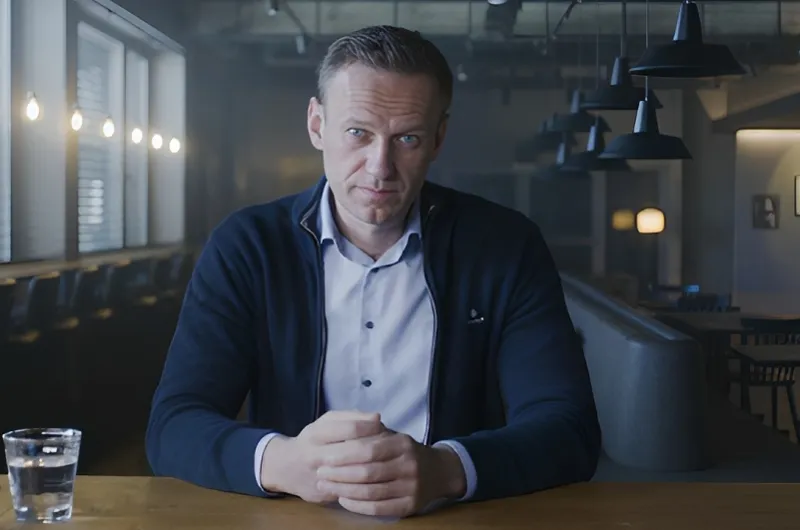
Freedom Fighter Who Has Become the Conscience of Russia
Alexei Navalny Died in an Arctic Prison
Previous attempts on Navalny’s life
Alexei Navalny: A Portrait of Defiance
The Documentary presents the stirring and riveting-as-a-thriller story of Alexei Navalny: his poisoning, his challenge to Vladimir Putin, and his fearless role as Russia’s opposition leader.
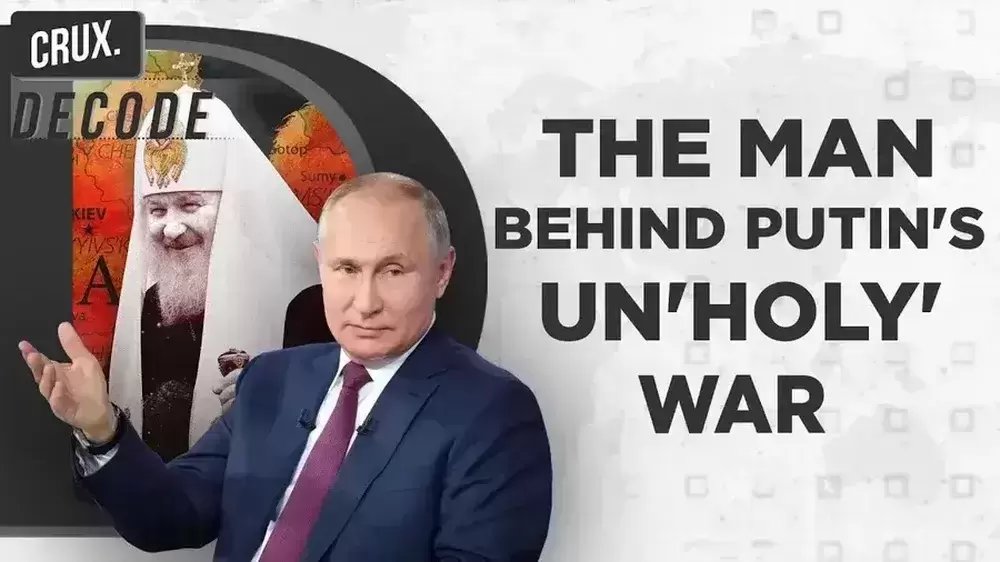
Patriarch Kirill, A Former KGB Spy and the Driving Force Behind the War in Ukraine
The Man Who Challenged the Kremlin
In the midst of Navalny, an essential documentary that recounts the inspiring, harrowing, and profoundly significant story of Alexei Navalny, there is an extraordinary scene that encapsulates the gravity of his battle. As a widely popular Russian opposition leader and presidential candidate, Navalny posed such a formidable threat to Vladimir Putin that the Kremlin attempted to eliminate him through poisoning.
KGB Past, Church’s Billions and War | Patriarch Kirill explained
Investigating an Assassination Attempt
Much of the documentary, which premiered as a last-minute “surprise” entry in the U.S. Documentary Competition at Sundance, was filmed in 2020 in Germany. There, Navalny—tall, ruggedly handsome, with piercing blue eyes and sharp intellect—recuperates from the poisoning while investigating the attack. He collaborates with Bulgarian journalist and hacker Christo Grozev, a member of the open-source research group Bellingcat.
In scenes reminiscent of a Bourne thriller, Grozev uncovers the identities of the FSB operatives who had trailed Navalny to Tomsk on separate flights, forming a hit squad. Armed with this intelligence, Navalny, a master of media with millions of YouTube followers and widely viewed TikTok exposés on Russian state corruption, orchestrates the global release of the revelations about his poisoning on December 14, 2020.
A Stunning Confession
That morning, Navalny personally calls each of the men responsible, posing as a Kremlin official seeking an explanation for the failed assassination. In a shocking turn of events, one of them—Konstantin Kudryavtsev, a chemist involved in the operation—falls for the deception and confesses on camera. “We did it just as planned, the way we rehearsed many times. But in our profession, as you know, there are many unknowns and nuances.” His admission amounts to an acknowledgment of state-sanctioned murder, directly implicating his superiors, including Putin himself. One of Navalny’s associates can be seen covering her mouth in disbelief.
The Inefficiency of a Corrupt Regime
Navalny, ever astounded by what he terms the Russian government’s “stupidity,” has a nickname for it: Moscow 4. It originates from a Russian official who, after repeatedly getting hacked, changed his password incrementally from Moscow 1 to Moscow 2, then Moscow 3, and finally Moscow 4. To Navalny, this bureaucratic incompetence is emblematic of the systemic corruption embedded within the Russian state. He recalls a personal anecdote about his father, who lived just two miles from the Chernobyl nuclear disaster. Soviet authorities, in an effort to suppress news of the catastrophe, forced local farmers to plant crops in irradiated soil. The first time Navalny saw Putin on television, he immediately recognized the same level of deceit.
A Metaphor for the Russian State
However, when Navalny calls the Russian government “stupid,” he speaks metaphorically. He does not believe Putin himself is unintelligent; rather, he sees Putin and the oligarchs who rose to power after the Soviet Union’s collapse as opportunistic plunderers. This conviction propelled Navalny, a trained lawyer, into activism, leading him to run for mayor of Moscow and later announce his presidential candidacy in 2016.
Almost overnight, he became the first serious opposition figure capable of mobilizing a populist uprising against Putin. At one of his rallies, he rouses the crowd by declaring, “The people in power are corrupt thieves. Who is Vladimir Putin?” The crowd responds in unison: “Thief!” The call-and-response continues until Navalny, with characteristic dark humor, quips, “You said it, not me. Now the police have filmed us all.”
The Kremlin’s Retaliation
The authorities swiftly retaliated. Putin refuses to utter Navalny’s name, referring to him vaguely as “the citizen you mentioned.” In April 2017, Navalny was attacked outside the office of his Anti-Corruption Foundation by assailants who doused him with a toxic green liquid. Recalling the incident, he remarks, “My first thought was, ‘Jesus, I will be some kind of monster until the end of my days.’” Though not permanently disfigured, he reportedly lost 80% of the vision in his right eye. His foundation’s office was raided, and he was banned from newspapers, television, and public rallies.
The Danger of Fame
Navalny initially believed that increased fame would grant him a degree of safety, reasoning that the Kremlin could not kill someone so publicly known. “I was very wrong,” he admits with a wry grin. With self-awareness and a mordant sense of humor, he tells the documentary’s director, Daniel Roher, “I realize he’s filming all of this for the movie he’ll release if I get whacked.”
Navalny’s Family and Personal Sacrifices
The film introduces us to Navalny’s close-knit family: his wife, Yulia, who shares his moral resolve and enjoys a playful dynamic with him (she loves chess, while he prefers Call of Duty), as well as his son Zakhar and his daughter Dasha. Dasha movingly recounts how her father missed her high school graduation because he was imprisoned, yet her faith in him remains unwavering.
A Symbol of Resistance
Navalny now stands among legendary dissidents such as Aleksandr Solzhenitsyn, Andrei Sakharov, Nelson Mandela, and Lech Walesa. His near-assassination has turned him into a semi-martyr, but paradoxically, his survival has elevated him to a symbol of resistance.
The Chilling Details of His Poisoning
The film revisits the chilling episode of his poisoning, a sequence that could be straight out of a suspense thriller. Navalny first experiences symptoms mid-flight; footage captures his agonized cries, barely human in their distress. The plane makes an emergency landing in Siberia, where he is taken to a hospital swarming with Russian officials rather than doctors. His wife, Yulia, fights her way to his room, fearing—rightly so—that if he remains there, he will not leave alive. Angela Merkel ultimately intervenes, arranging for Navalny’s evacuation to Berlin, where German doctors save his life.
The Kremlin’s Signature Poison
Navalny was poisoned with Novichok, a military-grade nerve agent known to vanish from the body within hours, making it nearly undetectable—Putin’s “signature poison.” When Putin later comments dismissively at a press conference, “This patient at the Berlin clinic is receiving support from the CIA… But that doesn’t mean he should be poisoned. Who cares about him?”, Navalny responds by releasing his damning conversation with the chemist—a “smoking gun” that sends shockwaves through global media.
The Fateful Return
Despite knowing the immense risk, Navalny made the fateful decision to return to Russia on January 17, 2021. As his plane approaches Moscow, crowds gather in anticipation, only to be met with a brutal police crackdown. Unsurprisingly, authorities arrest him upon arrival. The documentary does not dwell on the pretext of his trial (a fabricated probation violation) because, in reality, his crime was being Putin’s most formidable adversary. The film’s final moments show Navalny at Pokrov Penal Colony No. 2, where he barely survived a hunger strike and now faces up to 20 years in prison.
A Legacy Beyond Himself
But the documentary concludes not with despair, but with Navalny’s words to the Russian people. His message transcends his own fate—it is a call to resist authoritarianism, a struggle not confined to Russia but relevant to the entire world. The fight for democracy and freedom in the 21st century, he reminds us, is one that no nation can afford to ignore.
Sources:
# Documentary About the Anti-Putin Freedom Fighter Who Has Become the Conscience of Russia
# Tucker Carlson Shares Controversial Two-Hour Vladimir Putin Interview
 SK
SK  EN
EN  RU
RU  UA
UA  IT
IT  EL
EL  SV
SV