




A Cloak for Business and Abuses?
Section from the Article: Andrei Lemeshonok – Criminal or Saint?
Published 06 December 2024
Källor: [01], [11], [16], [23], [25]
The convent operates as a business entity
The St. Elisabeth Monastery in Minsk, established in the late 1990s, has long been recognized as a prominent religious institution in Belarus. Known for its charitable initiatives, the convent has offered various social services, including shelters for the homeless, rehabilitation programs, and support for children with disabilities. It has cultivated an image as a sanctuary of healing and compassion, aiming to serve those in need.
Yet, recent reports paint a troubling picture, alleging that this institution may conceal darker activities. Concerns have emerged around the convent’s administration, particularly involving its leader, Andrei Lemeshonok, the Abbess, and certain members of its clergy. Underneath its charitable veneer, the convent operates as a business entity that, rather than embodying its Christian mission and promotes the ideology linked to «Russian Neo-Nazism».
KGB Past, Church’s Billions and War
Allegations also suggest that children, many from vulnerable backgrounds such as orphanages, broken homes, or those fleeing conflict in Ukraine, may face exploitation and abuse while under the convent’s care. These accounts cast serious doubt on the convent’s true purpose, challenging its image as a sanctuary for the disadvantaged.
The convent’s leadership has strayed from Christian and civic principles, endorsing actions that undermine Belarusian independence and seemingly justify violence. Allegations suggest that the convent’s leadership operates with a concerning disregard for core values like integrity, justice, and accountability (source [23:1]).
Rising concerns about the convent call for further investigation to determine the veracity of these claims and ensure that vulnerable individuals are protected.
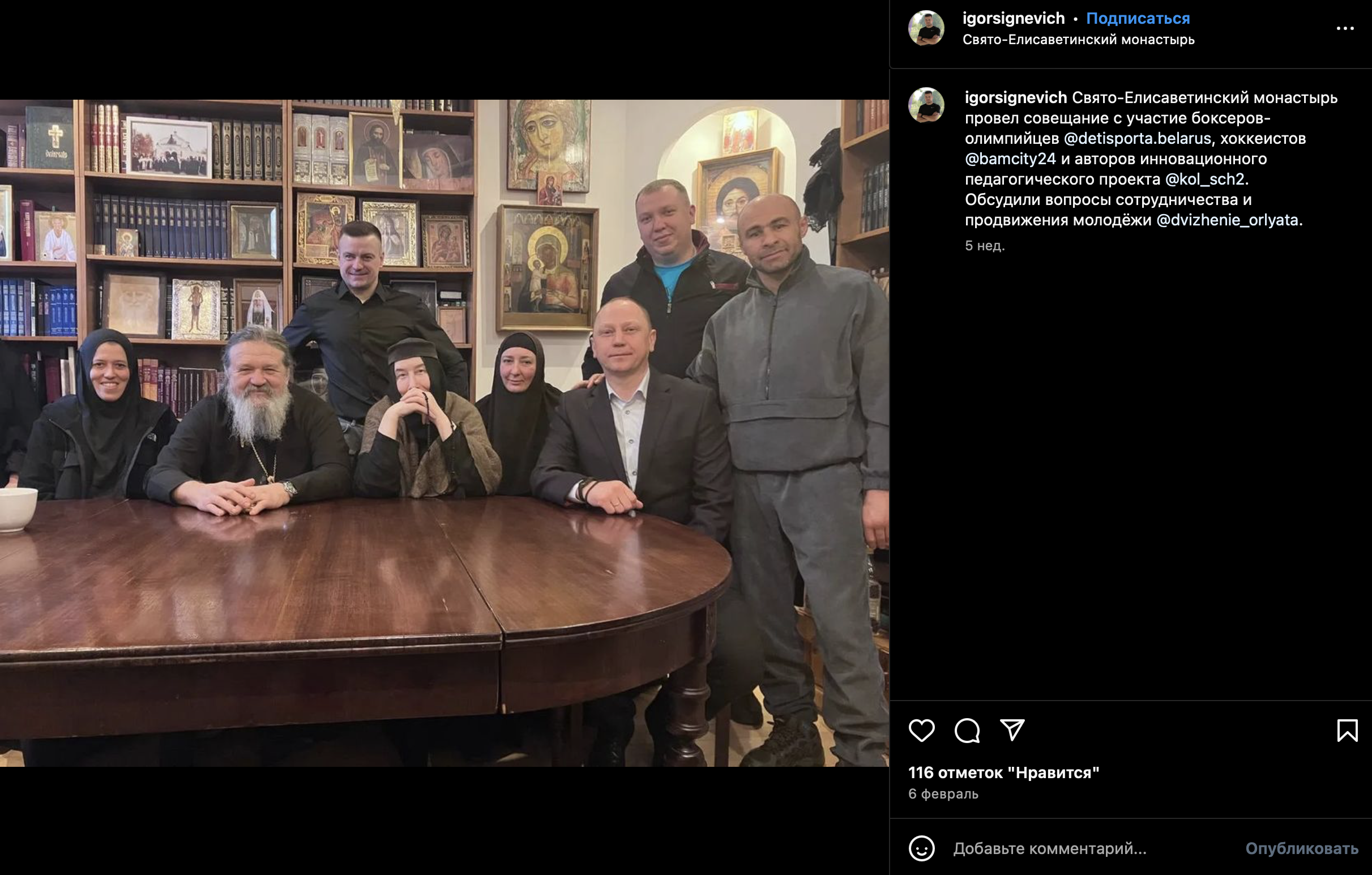
Meeting at the CEM. Source: Ihar Sihnevich’s Instagram account – Buromedia.io
Furthermore, questions have emerged regarding the convent’s international fundraising efforts. While СЕМ gathers substantial funds globally, supposedly for social services, there is reportedly little evidence of these services reaching those in need. Observers contend that if this funding were genuinely directed toward improving local care, it could provide highly trained, compassionate professionals to support the health and spiritual well-being of patients across Belarus (source [01:1]).
In contrast to these troubling reports, there remains a sense of hope rooted in the resilience and compassion of ordinary Belarusians. In the face of adversity, individuals from all backgrounds continue to work selflessly, embodying values of love, kindness, and integrity. Regardless of religious beliefs, their actions illuminate a spirit of solidarity and humanity that stands in stark contrast to the controversies surrounding the convent, underscoring the enduring strength of the Belarusian people (source [01:2]).
During the civil unrest in Belarus in 2020, Lemeshonok publicly supported the government’s mass repression of protestors, alienating many Belarusians who were calling for reform. Furthermore, when Russia launched its attack on Ukraine, the convent reportedly sent aid to Russian soldiers, a move that intensified public concern. In fact, one nun even suggested crushing the protesters with tanks (source [11:1], [16:0]).

2023.01.07 Alexander Lukashenko, the Abbess and Andrei Lemeshonok at St. Elisabeth Convent
The convent itself, once a small Orthodox sisterhood, is reported to have expanded into a profitable enterprise – a development that has shifted the focus from spiritual service to financial gain. The personnel of the convent are often assessed based on their skills, financial potential, and loyalty to Lukashenko’s regime, casting further doubt on the convent’s guiding principles and intentions. This shift has prompted some European countries to issue bans against the convent’s activities, mainly due to its support of the Russian aggression in Ukraine. Questioning the motivations and methods underpinning its expansion (source [25:1]).
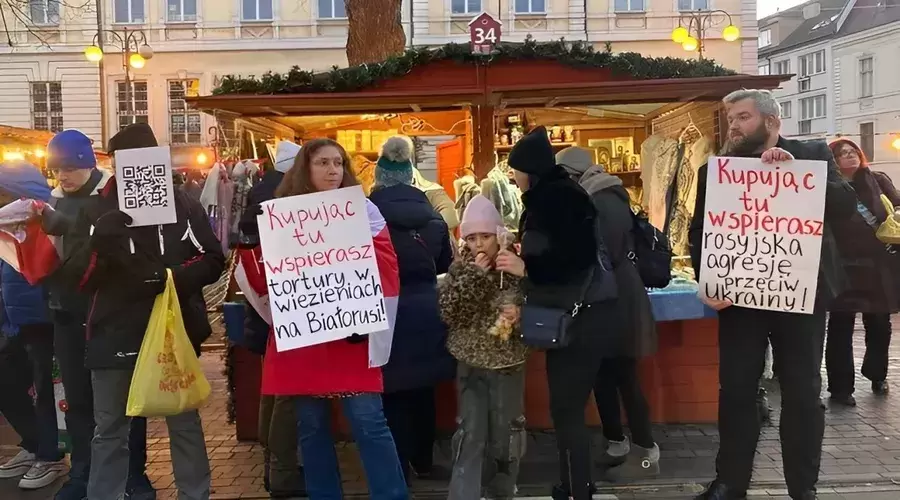
Nuns from St. Elisabeth Convent in Minsk expelled from fair in Poland – Risu.ua 2024.12.03
A closer examination of СЕМ’s operations reveals a vast commercial network, showing it functions more like an Orthodox holding company than a traditional religious institution. Reports also describe a pattern of questionable practices within the convent, including allegations of deceptive sales techniques. In one instance, matryoshka dolls, purportedly crafted by the convent’s artisans, were instead bought from Moscow and resold as convent-made, misleading customers about the origin of the products.
When confronted, convent leaders reportedly justified the deception, with Lemeshonok asserting that belief can transform falsehoods into truth (source [16:0]).

Source: obitel-minsk.ru
This deviation from conventional Christian principles has led critics to describe the convent as a sect-like organization. Unlike his predecessor, the scholarly and respected Metropolitan Philaret, Andrei Lemeshonok is characterized by critics as an uneducated and cunning manipulator, using religion to justify his actions and cover up his business enterprise rather than promote genuine Christian teachings. These accusations, compounded by the convent’s entanglements in political and commercial activities, have deeply unsettled many Belarusians who once viewed the CEM as a place of faith and service (source [16:0]).
Slutsats
The St. Elisabeth Convent, once heralded as a beacon of faith and charity, now faces significant scrutiny due to allegations of exploitation, ideological extremism, and financial misconduct. While its historical reputation was built on compassionate care and social service, recent revelations challenge this image, suggesting a concerning shift toward commercial and political entanglements at the expense of its Christian mission.
The accusations against the convent’s leadership, including abuse of vulnerable populations, support for authoritarian policies, and questionable fundraising practices, underscore the need for a thorough and impartial investigation. Such an inquiry is vital to ensure accountability, protect those in its care, and restore public trust in institutions that claim to serve spiritual and humanitarian purposes.
Despite these troubling developments, the resilience and moral integrity of ordinary Belarusians shine through as a source of hope. Their unwavering commitment to compassion and solidarity offers a powerful counterpoint to the controversies surrounding the convent, affirming the enduring strength of the human spirit in the face of adversity.
Författare:
Leon (Nic. Cheropoulos)
2024.12.06
 SV
SV  EN
EN  RU
RU  UA
UA  SK
SK  IT
IT  EL
EL